Wondering if Newcastle should make your shortlist? If you want more room, easier highway access, and a community that feels connected to the Oklahoma City metro without feeling packed in, Newcastle stands out. The key is knowing whether its layout, housing options, and everyday amenities match how you actually want to live. Let’s dive in.
Why Newcastle Gets Attention
Newcastle is the largest city in McClain County, and it has been growing quickly. Census QuickFacts estimates the population at 14,677 as of July 1, 2024, which is a 33.6% increase from the 2020 census base. That kind of growth often signals that more buyers are discovering the area and seeing real value in it.
The city describes Newcastle as a place where metropolitan amenities and small-town living coexist. That summary fits the location well. You are close to major metro destinations, but the overall housing pattern and community layout still lean more spacious and suburban than dense and urban.
Newcastle Location and Commute
For many buyers, Newcastle’s biggest advantage is access. The city says it stretches through the South Canadian River valley, with 26 miles of state highway running through it, frontage to Interstate 35 on the south and Interstate 44 on the north, and immediate access to the H.E. Bailey Turnpike. Will Rogers World Airport is also about 15 minutes away, according to the city.
That matters if your routine includes commuting into the Oklahoma City metro, heading toward Norman, or needing reliable regional access. Newcastle does not feel isolated. Instead, it functions more like a highway-connected community that gives you breathing room while keeping daily travel practical.
The state’s Access Oklahoma page also notes a planned east-west connector from Highway 37 and I-44 in the Tri-City area east to I-35 and Indian Hills Road. While future infrastructure does not change your decision overnight, it does reinforce Newcastle’s role as a commuter-friendly location.
What Homes in Newcastle Look Like
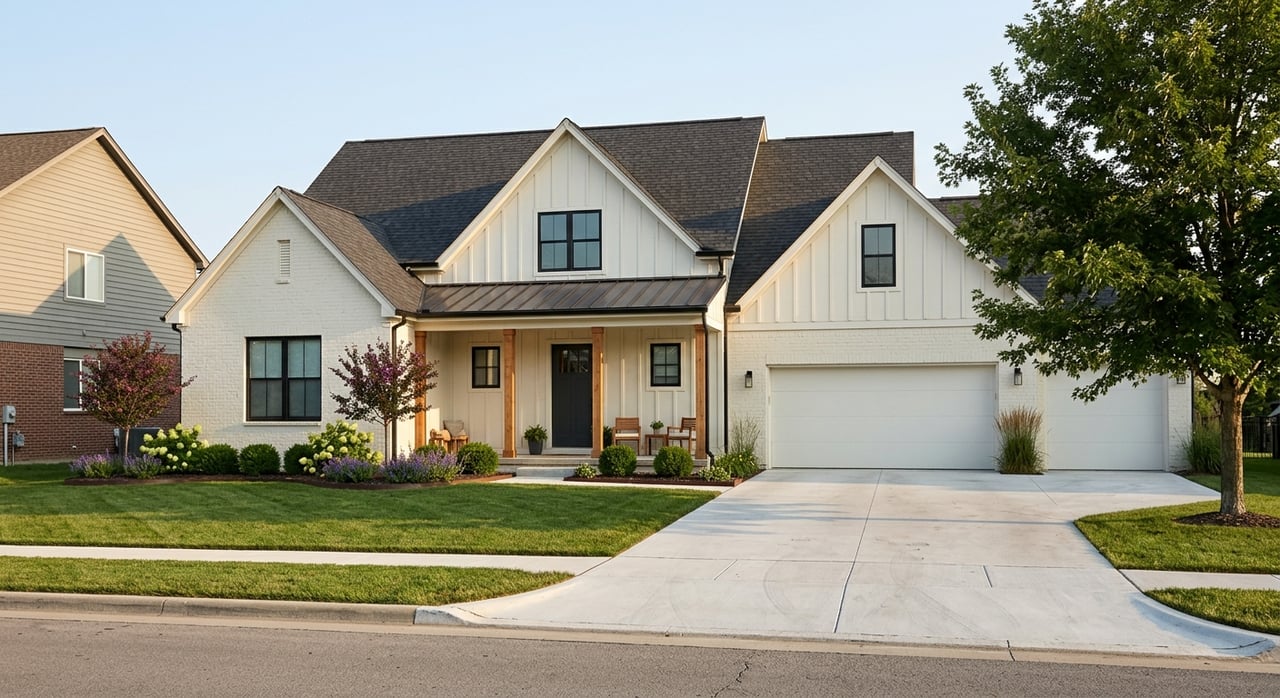
One of the most important things to understand about Newcastle is that the housing mix is broader than many people assume. The city’s zoning code includes estate-style residential districts, conventional single-family neighborhoods, and districts that allow higher-density housing types. That gives you more than one path if you are trying to match a home to your budget, goals, or lifestyle.
Some of the clearest differences show up in lot size. Newcastle’s E-1 district requires a minimum lot area of 80,000 square feet, which is about 1.8 acres. E-2 requires 43,560 square feet, or 1 acre, and E-3 requires 27,000 square feet, or about 0.6 acre.
On the other end of the spectrum, the more standard R-F-1 district requires a minimum lot area of 7,200 square feet. R-F-4 allows single-family, two-family, and 3+ unit housing with specific minimum lot requirements. The city also includes manufactured-housing subdivision and mobile-home-park districts, which means the market is not limited to one housing product.
Why Lot Size Matters in Newcastle
If you have been looking for room to spread out, Newcastle may feel very different from more tightly built parts of the metro. Larger-lot zoning can support space for workshops, outbuildings, extra parking, or simply more separation between homes. In the E-1 district, the code even allows limited horse or livestock use.
That can be especially appealing if you want an acreage-style lifestyle without giving up access to Oklahoma City area destinations. For buyers searching for specialty properties, this is one of Newcastle’s more practical strengths. It gives you options that are harder to find in areas built mostly around smaller subdivision lots.
Newcastle’s Overall Housing Profile
Census QuickFacts shows an owner-occupied housing unit rate of 83.7%. It also lists a median owner-occupied home value of $271,800 for 2020 through 2024, a median household income of $93,398, and median gross rent of $1,105.
Taken together, those numbers suggest a market with a strong owner-occupied presence. In plain terms, Newcastle appears to function more like a suburban or exurban homeownership market than an apartment-heavy environment. If that matches what you want, it is a positive sign.
Everyday Amenities in Newcastle
A location only works if daily life feels manageable. Newcastle offers more local amenities than many buyers expect from a smaller community on the edge of the metro. That can make a real difference when you are deciding whether a move will feel convenient over the long term.
Veterans Park is the city’s largest park at more than 90 acres. According to the city, it includes picnic areas, restrooms, open practice fields, a baseball backstop, walking trails, a basketball court, and a splashpad. The city also lists Leesa Cornett Park, Lions Park, and Puckett Park.
Newcastle also has its own public school system, including an early childhood center, elementary school, middle school, and high school. The community is served by a public library branch through the Pioneer Library System, and local primary care is available through INTEGRIS Health Medical Group Newcastle on North Main Street. Those kinds of basics matter because they support day-to-day routines close to home.
Who Newcastle May Fit Best
Newcastle tends to make the most sense for buyers who want a balance of space and access. Based on the city’s layout, transportation profile, and zoning, it may be a strong fit if you want room for hobbies, larger lots, or a property that feels less cookie-cutter. It can also make sense if you commute and want direct highway connections.
This area may especially appeal to:
- Buyers looking for more land or larger lots
- Households that want a quieter setting with metro access
- Commuters traveling toward Oklahoma City, Norman, or other nearby areas
- Buyers interested in acreage or specialty-property options
- Owners who value a more established homeownership feel
If your goal is a home with more flexibility, Newcastle deserves a closer look. That is especially true if you have been frustrated by smaller lots in other parts of the metro.
Who May Want a Different Setup
Newcastle will not be the right fit for everyone. If your top priority is a dense, walkable, urban environment with a broad selection of apartment-style living, this market may feel less aligned with your preferences. The city’s overall development pattern is more auto-oriented and lot-driven.
That does not make it better or worse. It simply means your decision should come back to lifestyle. The right move is the one that supports your daily routine, your budget, and the type of home you want to own or rent.
Questions to Ask Before You Move to Newcastle
Before you decide, it helps to get specific about what matters most to you. A move gets easier when you compare your priorities against what the area actually offers.
Ask yourself:
- Do you want more indoor and outdoor space?
- How important is highway access to your work or routine?
- Would a larger lot improve your lifestyle?
- Are you hoping for an owner-occupied neighborhood feel?
- Do you need a standard subdivision home, acreage, or another specialty property type?
Those answers can clarify whether Newcastle is a strong match or whether another nearby community would serve you better.
How to Decide With Confidence
The best relocation decisions are practical, not rushed. Newcastle offers a combination that can be hard to find: strong metro access, meaningful growth, a range of residential zoning, and room to spread out. If that lines up with the way you want to live, it may be exactly the kind of move that makes sense now and still feels right years from now.
If you are weighing Newcastle against other OKC-area options, a focused home search can save you time and reduce stress. The details matter, especially when you are comparing lot size, commute routes, and specialty-property potential. If you want a calm, strategic plan for your next move, Allie Webb can help you sort through the options with clarity.
FAQs
Is Newcastle, OK a good fit for commuters?
- Newcastle may be a strong fit for commuters because the city has access to Interstate 35, Interstate 44, the H.E. Bailey Turnpike, and multiple state highways, with Will Rogers World Airport about 15 minutes away according to the city.
What kind of homes can you find in Newcastle, OK?
- Newcastle includes estate-style residential districts, standard single-family neighborhoods, higher-density residential zoning, and areas for manufactured housing, so the housing mix is broader than many buyers expect.
Are large lots common in Newcastle, OK?
- Newcastle offers several larger-lot zoning districts, including E-1 at about 1.8 acres minimum, E-2 at 1 acre minimum, and E-3 at about 0.6 acre minimum.
Does Newcastle, OK have local parks and services?
- Yes. The city lists several parks, including Veterans Park, and Newcastle also has its own public school system, a public library branch, and local primary care.
Is Newcastle, OK more urban or suburban?
- Newcastle appears more suburban or exurban in character, with a strong owner-occupied housing profile, larger lots in many areas, and a development pattern built more around highway access than dense urban living.